Drip Ring vs Bleed Ring: What Is the Difference?

A drip ring is a thin spacer ring with a radial tap that sits between two pipe flanges, giving operators a controlled port to drain, vent, sample, or flush a line without taking the joint apart. In most piping specifications a bleed ring is the same hardware under a different name, which is why the two terms get mixed up so often. The real differences come down to how each name is used on the job and what the ring needs to do for the crew.
Whether you are writing a purchase specification, planning a shutdown, or decoding a line on a P&ID, knowing what each term means helps you order the right ring the first time. Flowell supplies flanged bleed rings in carbon steel, stainless steel, and specialty alloys, so the guidance below reflects what operators actually ask for when they need a safe way to relieve pressure or pull a sample.
Drip Ring vs Bleed Ring at a Glance
The comparison below shows where the two names line up and where suppliers and engineers tend to draw a distinction.
| Feature | Drip ring | Bleed ring |
|---|---|---|
| Hardware | Thin ring with one or more radial taps, sandwiched between two flanges | The same ring and the same construction |
| How the name is usually used | Often chosen to describe draining liquid or condensate from a flanged joint or low point | Often chosen to describe venting pressure, bleeding gas, or mounting a gauge |
| Connection | Half-inch socket weld or three-quarter-inch NPT tap is typical | Half-inch socket weld or three-quarter-inch NPT tap is typical |
| Installation | Between two flanges, inside the bolt circle, with a gasket on each side and longer studs | Between two flanges, inside the bolt circle, with a gasket on each side and longer studs |
| Pressure rating | Matches the rating of the flanges it sits between | Matches the rating of the flanges it sits between |
| Isolates flow? | No, pair it with a blind or blank flange | No, pair it with a blind or blank flange |
What Is a Drip Ring in Piping?
A drip ring in piping is a flange-mounted ring that adds a process connection to a joint that would otherwise have none. Once it is bolted in place, operators can open a small valve on the tap to drain residual liquid, release trapped gas, or take a sample, all without breaking the main flange connection or cutting into the pipe wall. That matters because welding a new tap into a pipe can trigger heat treatment and inspection requirements, while a ring simply bolts in between existing flanges.
How These Rings Are Built
A typical drip ring is machined from plate to match the flange bore and bolt circle. One or more radial taps run from the outer diameter to the inside of the ring, and the faces are machined to suit the flange type, whether raised face or ring type joint. Carbon steel and stainless steel are the most common materials, and specialty alloys are used where corrosive or high-temperature service calls for them. When a larger tap is required, the ring thickness may need to increase to keep the connection strong.
How a Drip Ring Is Installed Between Flanges
Installing a drip ring is straightforward, but it changes the joint, so the details matter. The ring sits inside the bolt circle with a gasket on each side, which means the joint now has two gasketed faces instead of one. Because the ring adds thickness, the original studs must be replaced with longer ones. The extra joint is also one more potential leak path, so a drip ring belongs only where its drain, vent, or sample function is actually needed.
Tap and Connection Options
- Half-inch socket weld taps for welded valve and instrument connections
- Three-quarter-inch NPT threaded taps for valves, plugs, and instruments
- One tap for a simple drain or vent, or multiple taps for combined vent, drain, and gauge connections
- Flanged outlets for specialized applications, which increase the overall footprint of the assembly
What a Bleed Ring Does in a Flanged Joint
A bleed ring is built the same way, and its job is to give a safe, measurable way to relieve pressure or residual fluid from a line or vessel. Operators reach for a bleed ring most often before maintenance, when trapped pressure has to come down before anyone loosens a flange. The ring lets the crew open a valve on the tap, watch the pressure fall, and confirm the section is safe to open.
Typical Jobs a Bleed Ring Handles
- Venting trapped gas or pressure from a line before maintenance or repair
- Draining liquid from a pipe section so it can be opened safely
- Taking process samples without interrupting flow in the main line
- Mounting pressure gauges or other monitoring instruments for diagnostics
- Injecting chemicals or flushing a section of line
- Confirming that the space between an isolation point and the work area is depressurized
These rings are used across oil and gas, chemical processing, power generation, and other heavy industries. They also appear beside in-line instruments, including orifice flange union assemblies, where a drain or vent port keeps the run easy to service without disturbing the measurement hardware.
Why the Two Names Overlap
Search any supplier catalog and you will find both names used for the same kind of ring, and many list them together as drip, bleed, or vent rings. The overlap is real, and it is the main reason purchase orders get confusing.
How Suppliers Use Each Name
Most companies call the ring a bleed ring because it lets crews bleed off pressure or mount a gauge. Some suppliers reserve drip ring for rings used to remove small amounts of liquid or condensate from gas and steam service, particularly at low points. Either way, the ring is the same flange-mounted part with the same installation requirements, so the safest approach is to describe the function, size, class, material, and tap details on the order instead of relying on the name alone.
What a Drip Ring Is Not
A drip ring does not sit at the base of a valve or pump to catch leaks, and it is not a drip pan, containment tray, or drip leg. Those items collect or redirect fluid that has already escaped. A flange-mounted drip ring does the opposite: it gives you a controlled, deliberate path to drain or vent a line before the fluid ever becomes a leak.
Pairing Tapped Flange Rings With Blinds and Spacers
A ring with a tap connects to the process, but it does not isolate it. Positive isolation comes from a solid barrier in the line, such as a blank flange or a blind. In practice the two work as a team: the blind seals off the section, and the ring lets the technician drain and vent the dead space between the blind and the work area so it can be verified safe. paddle spacers and blinds fit between the same flanges and make that isolation step quick and visible.
This is also why a bleed ring should never be treated as an isolation device. If the valve on the tap is the only thing between the process and the crew, the line is not isolated, and that is the situation a blind exists to prevent.
Safe Depressurization Before You Open a Flange
Relieving pressure is a formal step in a safe shutdown, not an afterthought. OSHA’s hazardous energy standard requires that, after lockout or tagout devices are applied, all potentially hazardous stored or residual energy be relieved, disconnected, restrained, or otherwise rendered safe, and that isolation be verified before work starts. For piped systems, trapped pressure and trapped liquid are exactly that kind of stored energy.
OSHA Energy Control Sequence
The sequence below follows OSHA’s application of control. A vent or drain port on a flange ring supports the stored energy and verification steps, and your own written procedures and the standards that apply to your facility govern the exact method.

Source: 29 CFR 1910.147, The control of hazardous energy
OSHA also names the hardware that counts as a lockout device: its definition includes blank flanges and bolted slip blinds. Where a line needs a reusable barrier, figure 8 spectacle blinds give crews a solid disc and an open ring in a single piece, so the line can be blinded and reopened without hunting for loose parts.
Why Controlled Venting Protects Crews
The stakes are well documented. OSHA estimates that compliance with its lockout and tagout standard prevents 120 fatalities and 50,000 injuries each year, and workers hurt by hazardous energy lose an average of 24 workdays recovering. A properly specified ring with a valve on the tap gives the crew a deliberate, visible way to bring a section to zero before the first stud is loosened.

Source: OSHA Fact Sheet FS-3529, Lockout/Tagout
Pressure Class, Materials, and Sizes
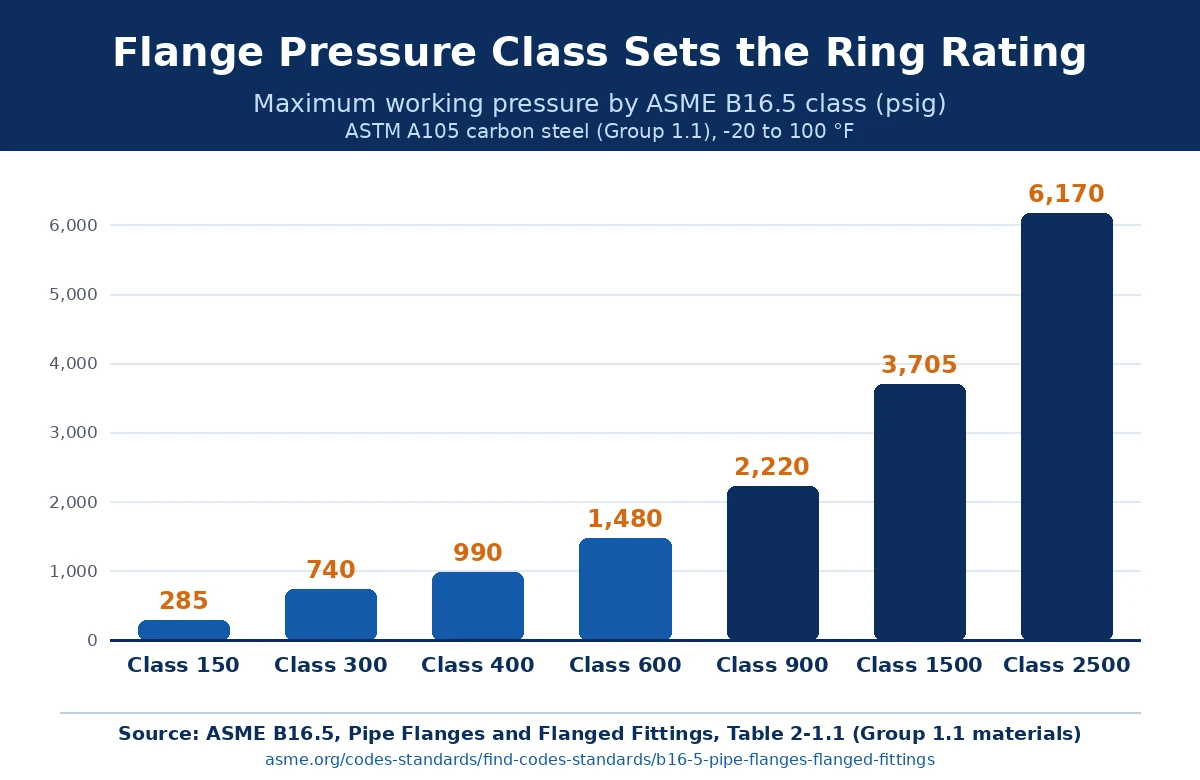
A drip ring or bleed ring is only as strong as the flange joint around it, so it is rated to match the pressure and temperature rating of the flanges it sits between. ASME B16.5 covers flanges from NPS 1/2 through NPS 24 in pressure classes from 150 to 2500, and the maximum working pressure rises quickly as the class goes up.
Source: ASME B16.5, Pipe Flanges and Flanged Fittings
Matching the Ring to the Flange Class
The chart shows carbon steel at ambient temperature. Allowable pressure drops as temperature rises, and it changes with the material group, so always check the full pressure and temperature tables for your service before you finalize a ring. The class on the ring must match the class on both flanges, and the facing must match too, whether raised face or ring type joint.
Material Choices
- Carbon steel for general oil and gas and utility service
- Stainless steel where corrosion resistance matters
- Specialty alloys for aggressive chemicals or high-temperature service
Standard rings are commonly supplied across a wide range of line sizes, often from NPS 1 up through NPS 24, and special diameters, flat or contoured profiles, and tap layouts can be made to order.
How to Specify the Right Flange Ring
Because the two names overlap, a good specification leaves nothing to interpretation. Give the supplier the details that define the part, and the ring you receive will fit the joint on the first try.
Specification Checklist
- Nominal pipe size and flange pressure class
- Flange facing, such as raised face or ring type joint
- Ring material and any corrosion or temperature requirements
- Tap size and connection type, such as socket weld or NPT
- Number and orientation of taps
- Longer studs and two gaskets, included in the material takeoff
- Companion blind or blank flange if the line must be isolated
If your flange facing, tap layout, or alloy is unusual, custom machining lets the ring be built around your joint instead of forcing a standard part to fit. When you are ready, request a quote for your drip ring order with your size, class, facing, and tap details.
Common Mistakes to Avoid
- Ordering by name alone without stating the function and connection type
- Forgetting that the ring adds thickness, so the studs must be longer
- Skipping the second gasket
- Treating the valve on the tap as isolation instead of using a blind
- Adding rings where no drain, vent, or sample point is needed, which adds another potential leak path
Flanged Rings and Custom Machining From Flowell
Flowell Corporation is a family-owned manufacturer of custom machined parts and flow measurement products for the oil and gas industry, with three decades of experience behind every order. Each ring is built to the specification you provide and inspected before it ships.
Flowell also supplies flow measurement components for oil and gas that use the same flanged connections, so one supplier can cover the whole assembly. Tell the team what you are connecting and what you need to relieve, and they will help you choose the right configuration.
| Request a Quote for Drip Rings and Bleed Rings |
Frequently Asked Questions About Flange Rings
What is a drip ring in piping?
A drip ring is a thin ring with a radial tap that sits between two pipe flanges. The tap gives operators a controlled port to drain, vent, sample, or flush the line without taking the flange joint apart.
Is a drip ring the same as a bleed ring?
In most piping specifications, yes. Both names describe a flange-mounted ring with one or more radial taps. Some suppliers use drip ring for liquid or condensate drainage and bleed ring for venting pressure, so list the function, size, class, and tap details when you order.
What does a bleed ring do?
A bleed ring is used to vent trapped gas, drain liquid, take samples, mount gauges or instruments, and inject chemicals. It is also used with a blind so a technician can confirm the space between the isolation point and the work area is depressurized.
Where is a drip ring installed?
A drip ring is installed between two flanges, inside the bolt circle, with a gasket on each side. It is not mounted at the base of a valve or pump to catch leaks, which is a common misconception.
Does a drip ring isolate flow?
No. A drip ring or bleed ring provides a process connection but does not provide positive isolation. Pair it with a spectacle blind, paddle blind, or blank flange when the line must be physically isolated.
What tap size does a drip ring use?
Common tap options are a half-inch socket weld connection or a three-quarter-inch NPT threaded connection. Larger taps can increase ring thickness, and flanged outlets can be made for specialized applications.
What pressure rating does a drip ring have?
A drip ring is rated to match the flange class it sits between, such as Class 150, 300, 600, 900, or 1500. Always confirm the pressure and temperature rating for the specific material against ASME B16.5.
Do I need longer studs for a drip ring?
Yes. The ring adds thickness between the flange faces, so the standard studs need to be replaced with longer ones, and a separate gasket is needed on each side of the ring.