Flow Measurement Uncertainty Analysis: What Impacts Accuracy?
In any operation where fluids are bought, sold, processed, blended, monitored, or controlled, flow measurement uncertainty analysis helps determine how much confidence engineers can place in a reported value. A flow reading is never perfectly exact. It is influenced by the primary element, transmitter, installation, fluid properties, operating conditions, calculation inputs, and maintenance history. Understanding those uncertainty sources helps protect production data, billing accuracy, compliance reporting, and process control decisions.
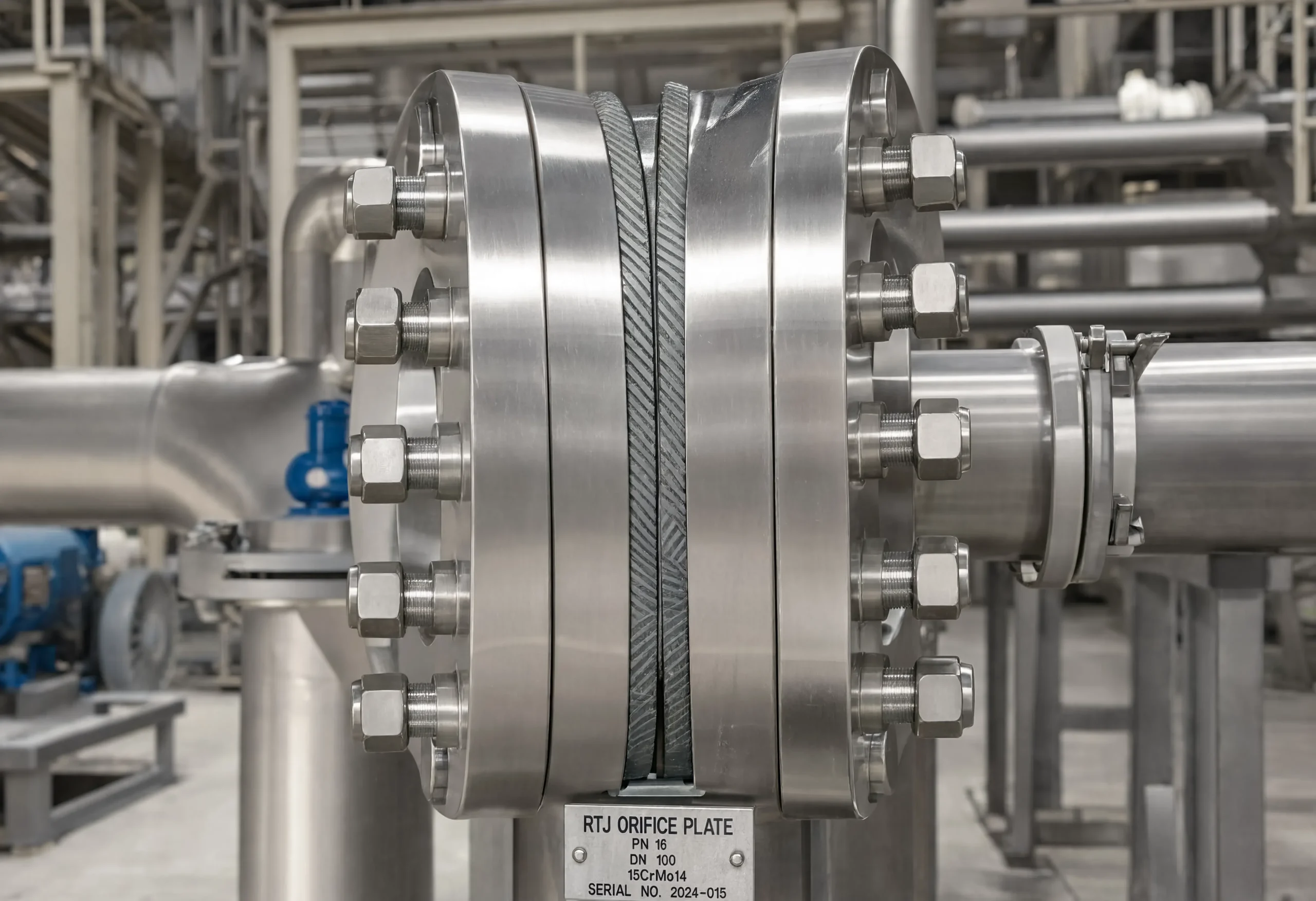
For differential pressure measurement, uncertainty is especially tied to the complete assembly. The orifice plate, bore condition, beta ratio, flange fit-up, RTJ plate holders, meter tube, impulse lines, transmitter range, and flow computer inputs all affect the final number. Flowell supports industrial users with flow measurement products, orifice plate flow meter systems, and product-specific support through contact Flowell.
Flow measurement uncertainty analysis explained
Flow measurement uncertainty analysis is the process of identifying, estimating, and combining the variables that affect a flow reading. Instead of asking only whether a meter is accurate, uncertainty analysis asks how close the final reported value is likely to be under actual operating conditions. That distinction matters because a published meter specification is only one part of the final measurement picture.
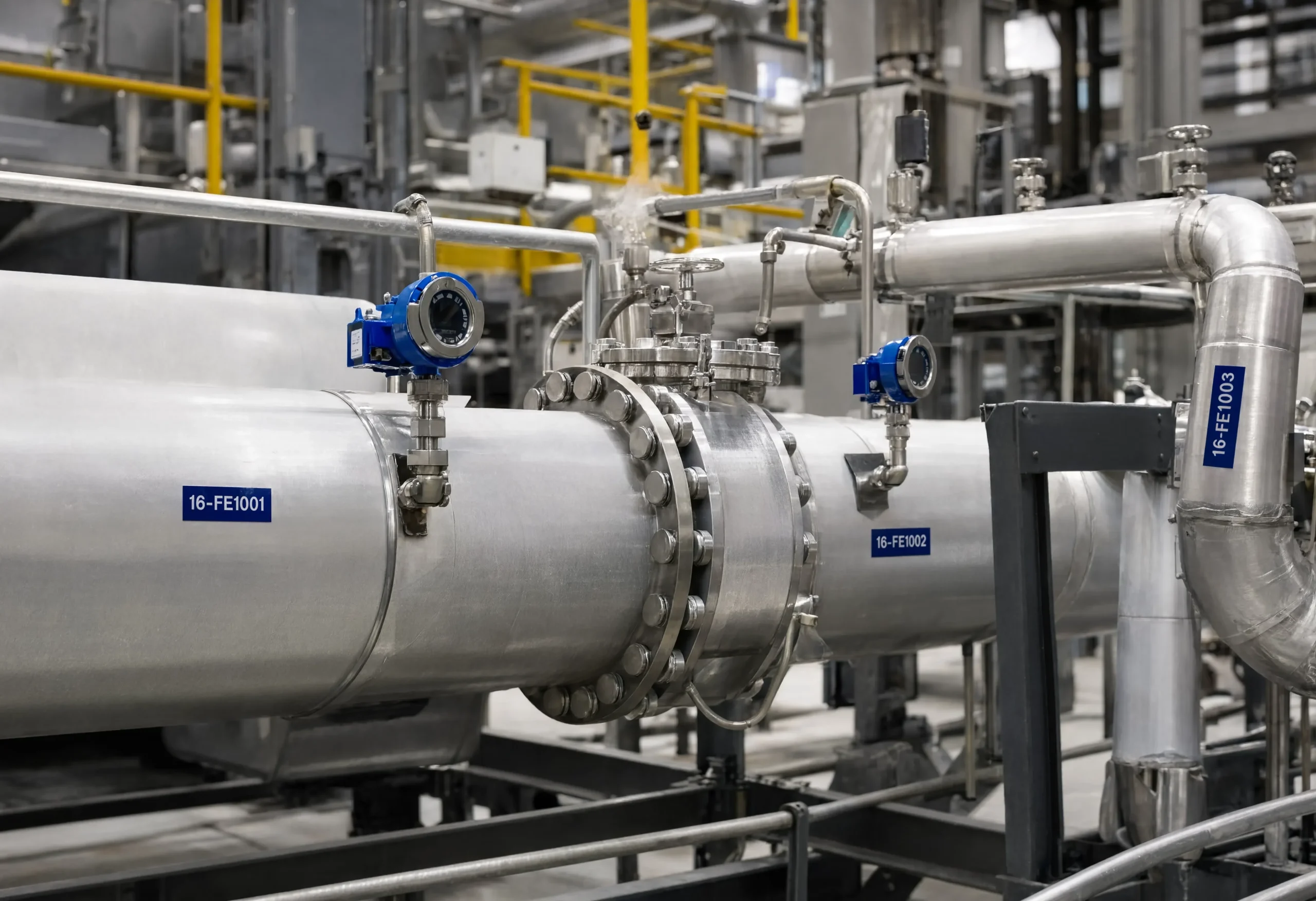
A typical industrial measurement system may include a primary flow element, pressure transmitter, temperature transmitter, density input, impulse lines, signal conditioning, flow computer, software calculation, and data acquisition hardware. Each part can introduce deviation from the true value. Uncertainty analysis evaluates those contributions and combines them into a realistic range of confidence.
Uncertainty is not the same as error. Error is the difference between the measured value and the true value. Uncertainty describes the range where the true value is expected to lie.
Flow measurement uncertainty analysis in industrial applications
In industrial settings, uncertainty analysis matters wherever flow values affect cost, safety, efficiency, reporting, or product quality. Custody transfer systems, allocation metering, chemical dosing, steam service, fuel gas monitoring, water treatment, and process control loops all depend on reliable measurement data.
What impacts flow measurement accuracy most?
The largest contributors to uncertainty usually come from a small group of recurring issues: instrument performance, installation quality, process variability, calculation inputs, component condition, and maintenance discipline. In many cases, the most damaging problems come from how a measurement technology is applied rather than from the technology itself.
Process conditions
Pressure swings, temperature changes, density shifts, two-phase flow, solids, fouling, corrosion, and Reynolds number changes can all increase uncertainty.
Installation and fit-up
Misalignment, poor straight run, damaged flange surfaces, incorrect holder fit, and disturbed flow can undermine measurement performance even when the components are correctly made.
Maintenance and condition
Worn plates, damaged edges, transmitter drift, poor calibration records, and undocumented replacements can increase uncertainty over time.
Instrument accuracy, installation, and process conditions
Instrument accuracy is the most obvious contributor to uncertainty, but it is often misunderstood. A published accuracy specification may apply only within a certain range, under certain fluid conditions, with proper calibration, and with the correct installation. If the meter is used outside that envelope, the actual uncertainty can be higher than expected.
Instrument-related contributors
- Meter linearity across the operating range
- Repeatability under steady conditions
- Calibration traceability and interval
- Sensor drift over time
- Signal resolution and noise
- Pressure, temperature, and density input accuracy
- Flow computer configuration and engineering units
Process-related contributors
- Pressure and temperature swings
- Density and viscosity changes
- Fluid composition variability
- Two-phase or multiphase flow
- Fouling, erosion, scale, and debris
- Pulsating or intermittent flow
- Operation near the low end of the measurement range
Installation effects that increase uncertainty
Installation effects are a major source of poor field performance. Elbows, reducers, valves, tees, pumps, and compressors can create swirl, asymmetry, and turbulence before the meter. In differential pressure systems, poor centering, damaged flange faces, incorrect holder selection, impulse line issues, and insufficient straight run can all affect the final reading.
How orifice plate assemblies create uncertainty
Orifice plate flow measurement relies on a known restriction and a measured pressure difference. The calculation depends on bore diameter, pipe inside diameter, fluid density, differential pressure, pressure, temperature, discharge coefficient, and expansion factor. If any input is wrong, the final flow value can shift.
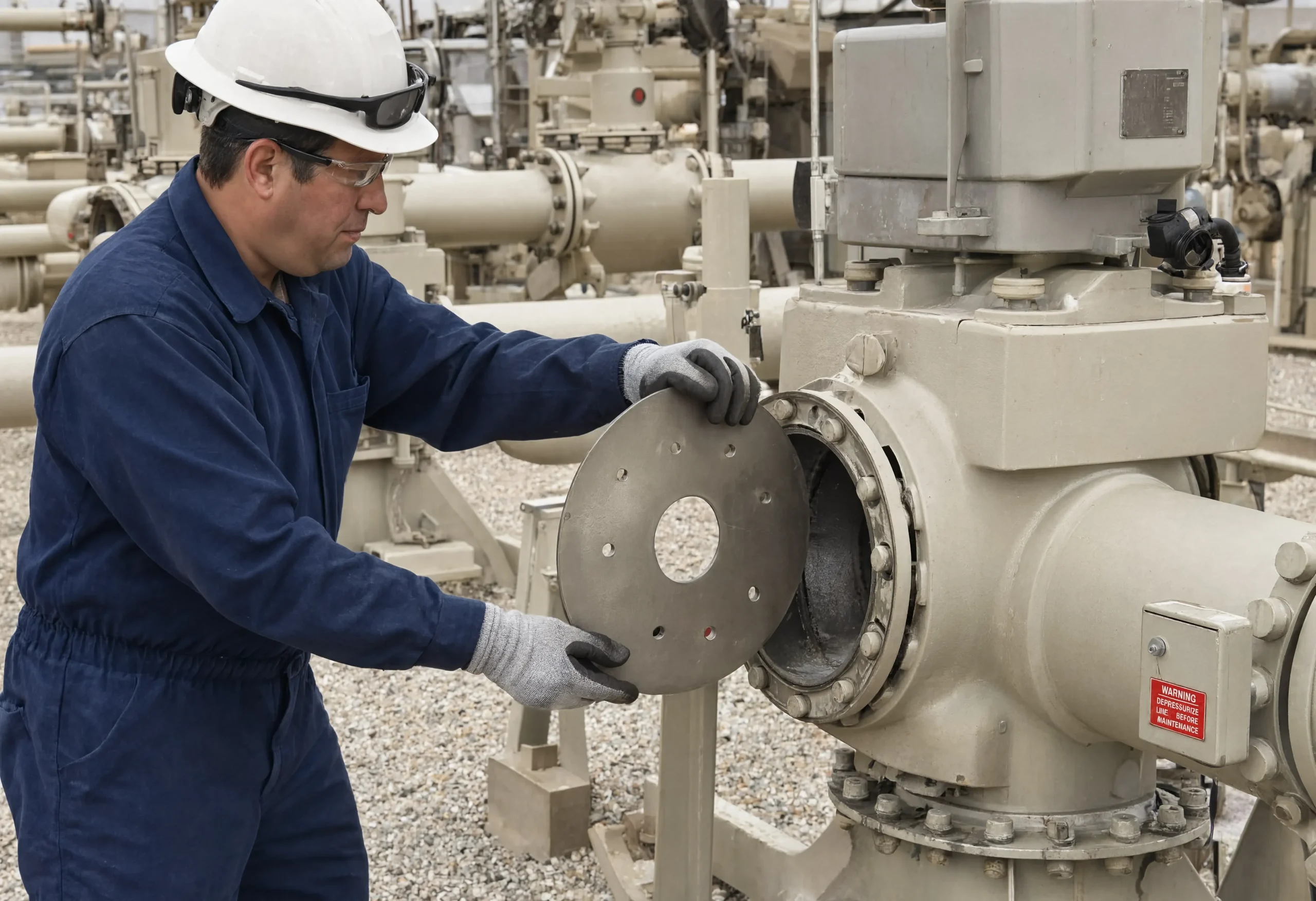
For orifice plate systems, uncertainty is often tied to the physical condition of the plate and surrounding hardware. Edge wear, bore enlargement, incorrect beta ratio, poor holder fit-up, damaged flange surfaces, or disturbed flow can all change how the assembly behaves. Flowell’s article on orifice plate edge wear and measurement accuracy explains why plate condition should not be treated as a minor maintenance issue.
| Assembly Area | Uncertainty Source | Why It Matters |
|---|---|---|
| Orifice plate | Bore diameter, edge condition, plate flatness, material, and surface finish | The restriction must match the geometry assumed in the calculation |
| RTJ plate holder | Ring size, seating surfaces, holder style, plate retention, and fit-up | The holder helps position the plate inside the ring joint orifice flange assembly |
| Flange assembly | Tap location, alignment, pressure class, sealing surfaces, and installation condition | Poor flange condition can affect both mechanical fit and pressure measurement stability |
| Meter run | Straight run, upstream disturbances, pipe ID, and flow profile | Disturbed flow can alter the relationship between differential pressure and actual flow |
RTJ plate holders and flow measurement uncertainty
In ring joint orifice flange assemblies, the holder is part of the physical measurement chain. A correctly selected holder supports plate positioning and repeatable fit-up. A mismatched, worn, damaged, or poorly selected holder can create mechanical uncertainty that affects the overall measurement setup.
This is why RTJ holder review belongs in the uncertainty conversation. If a plate is replaced, if bore sizing changes, or if the operating range no longer matches the original design, the holder style and compatibility should also be reviewed. Flowell’s RTJ plate holder specifications explain Style 560 and Style 590 options, while the broader RTJ plate holders resource covers how these components fit into ring joint orifice flange assemblies.
Beta ratio and bore sizing as uncertainty factors
Beta ratio is the relationship between the orifice bore diameter and the pipe inside diameter. It affects differential pressure signal strength, permanent pressure loss, and the usable range of the measurement. If the bore is not sized for current operating conditions, the system may generate weak signals, excessive pressure loss, or poor low-flow performance.
Beta ratio also becomes an uncertainty factor when the bore has worn, when pipe ID was assumed instead of measured, or when a replacement plate is copied from an old design that no longer fits the process. Flowell’s article on orifice plate beta ratio explains how bore-to-pipe relationship affects measurement behavior.
For differential pressure measurement, a clean calculation is only as good as the dimensional and process data behind it.
How to reduce uncertainty in flow measurement systems
Reducing uncertainty starts with matching the measurement system to the real process, not a best-case scenario. The most reliable systems are selected, installed, calibrated, and maintained around actual operating conditions. That includes reviewing flow range, fluid properties, piping constraints, transmitter range, inspection access, and replacement planning.
Engineering best practices
- Select the right measurement approach for the fluid and operating range
- Verify actual pipe inside diameter and process data
- Design the installation for stable flow
- Use appropriate straight run or flow conditioning where needed
- Match transmitter range to expected differential pressure
- Review pressure, temperature, and density inputs
- Confirm plate, holder, and flange compatibility
Maintenance best practices
- Inspect plates, holders, flanges, and impulse lines on a defined schedule
- Document bore condition, edge wear, corrosion, and deposits
- Calibrate transmitters and supporting instruments
- Verify flow computer settings and engineering units
- Track process changes that affect sizing
- Replace worn or questionable components before they affect confidence
- Keep drawings and replacement details current
Application examples where uncertainty matters
Measurement uncertainty has real operational and financial consequences. The more critical the flow value is, the more discipline the system deserves. In custody transfer and allocation service, a small uncertainty issue can add up to significant product and revenue impacts over time. In steam or utility service, poor measurement can affect energy management and process efficiency. In industrial process control, uncertainty can lead to unstable control decisions or hidden product losses.
Custody transfer and allocation
Small percentage differences can become large financial differences over time. Stable measurement depends on traceable calibration, correct sizing, and component condition.
Steam and utility measurement
Pressure, temperature, condensate behavior, and transmitter inputs can all influence the final flow value and energy management decisions.
Oil, gas, and process service
Produced fluids, corrosion, debris, and changing flow ranges can increase uncertainty if plates and supporting hardware are not inspected or resized when needed.
Users comparing equipment options can start with flow measurement systems, review differential pressure flow measurement, or browse Flowell’s industrial flow measurement products.
Uncertainty reduction checklist
A practical uncertainty review should combine process information, component condition, installation details, and instrument performance. The checklist below gives engineering and maintenance teams a stronger starting point.
| Review Area | Questions to Ask | Why It Matters |
|---|---|---|
| Operating range | Are minimum, normal, and maximum flow rates known? | The system must perform across the full range, not only one design point |
| Pipe and bore data | Are actual pipe ID, plate bore, and beta ratio confirmed? | Incorrect dimensions can shift the flow calculation |
| Primary element condition | Is the plate edge clean, sharp, and within tolerance? | Worn geometry can change discharge behavior |
| Holder and flange fit | Does the holder match the ring size, flange type, and plate arrangement? | Poor fit-up can add mechanical uncertainty |
| Installation profile | Is straight run adequate and are upstream disturbances controlled? | Flow profile distortion can increase measurement error |
| Instrumentation | Are transmitters, compensation inputs, and flow computer settings verified? | Weak secondary inputs can undermine a strong primary element |
External reference for measurement uncertainty and DP flow
Engineering teams often reference ISO 5167 when working with differential pressure flow measurement practices and pressure differential devices. That reference is useful for standards-based context, but a dependable field result still depends on the actual installation, component condition, process data, and maintenance discipline.
Flow Measurement Uncertainty FAQs
What is flow measurement uncertainty analysis?
Flow measurement uncertainty analysis is the process of evaluating the variables that affect a flow reading and estimating the range where the true value is expected to fall.
What impacts flow measurement accuracy the most?
The biggest contributors are usually instrument accuracy, installation quality, process variability, calculation inputs, primary element condition, and maintenance history.
How do RTJ plate holders affect measurement uncertainty?
RTJ plate holders affect uncertainty by supporting the physical fit-up and positioning of the orifice plate in ring joint flange assemblies. Incorrect holder fit or damaged seating surfaces can add mechanical uncertainty.
Can a good flow meter still produce uncertain results?
Yes. A meter with strong published accuracy can still perform poorly if it is installed in disturbed flow, used outside its operating range, paired with weak input data, or poorly maintained.
How can flow measurement uncertainty be reduced?
Uncertainty can be reduced by using accurate process data, selecting the right measurement approach, improving installation conditions, maintaining instruments, inspecting primary elements, and verifying calculations.
Why does orifice plate condition matter for uncertainty?
Orifice plate condition matters because edge wear, bore enlargement, corrosion, deposits, or damage can change the geometry used to create differential pressure and calculate flow.
Get help improving flow measurement confidence
If you need support with orifice plate assemblies, RTJ holder fit-up, sizing, replacement components, or flow measurement products, Flowell can help review the details that affect accuracy. Start with sizing support, send project information through contact Flowell, or return to the Flowell homepage to review additional industrial flow measurement solutions.