Venturi Flow Meter Systems
Flowell manufactures components used in venturi flow meter systems for gas, liquid, and steam service where stable measurement and reduced permanent pressure loss are important. A venturi meter accelerates flow through a shaped throat, creating a predictable differential pressure that can be converted into a reliable flow value. When the meter body, supporting hardware, and installation conditions are properly matched to the application, venturi systems can deliver strong long-term performance in demanding industrial service.
Venturi selection is usually driven by more than one factor. Pressure loss budget, process conditions, straight-run availability, expected operating range, and long-term stability expectations all influence whether a venturi build is the best direction. If you already have the application details ready, you can move directly into sizing support or contact us. If you are still comparing approaches, it also helps to review differential pressure flow measurement, orifice plate flow meter systems, and the broader category of flow measurement systems.
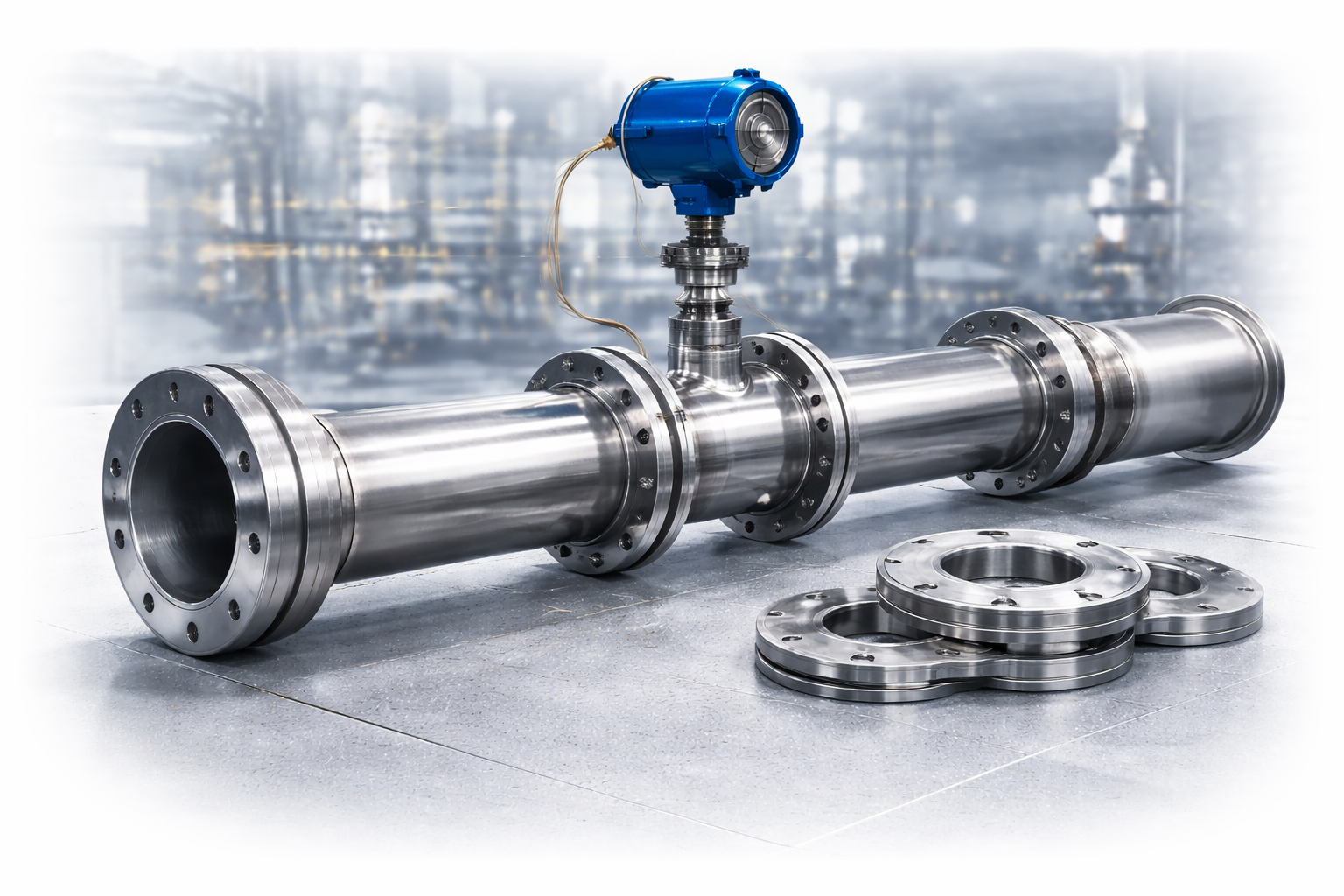
How venturi flow meter systems work
Venturi flow meter systems work by using a converging inlet section, a throat, and a gradual recovery section to create and measure a controlled differential pressure. As the fluid accelerates into the throat, static pressure decreases. Instrumentation then measures the pressure difference between two points in the system and uses that differential to calculate flow rate. The geometry is designed to support pressure recovery better than many abrupt restriction methods, which is why venturi meters are frequently selected when permanent pressure loss matters.
That design advantage does not mean venturi systems are automatic answers for every application. The final performance still depends on how well the meter size, flow range, piping conditions, and supporting components match the real process. In many installations, the success of the system depends as much on the quality of the surrounding hardware as it does on the venturi element itself.
Teams comparing system options often evaluate venturis alongside other DP methods, then narrow into the best-fit build based on service demands. That is where related categories such as orifice plate flow meter systems, differential pressure flow measurement, and flow meter accuracy and calibration become useful next reads.
Venturi systems are often chosen when the application calls for dependable measurement with a stronger balance between repeatability and lower permanent pressure loss.
What goes into a complete venturi flow meter system
Primary element
The core device is the venturi itself. Its shaped internal geometry creates the measurable differential while supporting pressure recovery through the expanding downstream section.
Meter run and flow conditioning support
In constrained layouts or installations with upstream disturbance, a meter tube and straightening vanes can help create more stable conditions for the meter.
Protection against debris and fouling
Dirty service can undermine long-term stability. In those applications, strainers can help reduce the risk of contamination-related performance issues.
Maintenance and vent support
Where draining or venting between flanges is part of startup or service work, bleed rings can improve handling and maintenance access.
Why venturi flow meter systems are selected
Venturi systems are often selected because they can offer a practical combination of measurement stability and lower permanent pressure loss. In industrial service, that balance matters when process efficiency, pumping energy, or long-term operating cost are part of the decision. They are also often chosen when a system must remain reliable in service conditions that may be less forgiving for more abrupt restriction elements.
Venturi flow meter systems fit chart
| Selection Factor | Why It Matters | How Venturi Systems Compare |
|---|---|---|
| Permanent Pressure Loss | Lower ongoing energy loss can matter in many installations | Venturi geometry is often preferred when reduced permanent pressure loss is a priority |
| Long-Term Stability | Repeatability over time affects operations and confidence in readings | Venturis are often chosen when durable long-run performance matters |
| Service Demands | Process severity can influence which DP element is the stronger fit | Venturi systems are frequently evaluated for demanding industrial conditions |
| Comparison Against Other DP Methods | Not every installation values the same tradeoffs | Venturis are often compared directly with orifice plate systems and flow nozzles |
Venturi selection is especially worth considering when an installation is sensitive to energy loss or when the process needs a DP element that can maintain strong performance over a long service life. That does not mean it is always the right answer. It means the tradeoff is often worth reviewing carefully before defaulting to a different restriction type.
Installation conditions that affect venturi flow meter systems
Venturi meters are often thought of as forgiving compared with some other DP elements, but installation quality still matters. Upstream disturbance, poor straight-run conditions, debris, and incorrect sizing can all reduce the real-world stability of the reading. In many industrial systems, the final result depends on how well the line conditions support the meter body and how well the operating range matches the selected geometry.
That is why practical support components often make a noticeable difference. A meter tube can create a more controlled flow section. straightening vanes can help address swirl and unstable profile. In dirty service, strainers can reduce the long-term drift that comes from debris and contamination.
If the application already has performance issues, it is also helpful to review what factors affect flow measurement accuracy, how to install a flow meter correctly, and how often industrial flow meters should be serviced as part of the evaluation process.
Common issues that reduce field performance
- Insufficient straight run or poor upstream piping conditions
- Swirl and turbulence created by elbows, valves, reducers, or nearby equipment
- Debris or fouling that affects long-term stability
- Flow range mismatch between the selected meter and the actual operating profile
- System layouts that need more conditioning support than originally planned
- Applications where another DP approach may better fit the operating constraints
Venturi flow meter systems compared with other DP options
Choosing a venturi is often about deciding which tradeoffs matter most. In many applications, venturis are chosen because pressure loss matters more than lowest initial cost. In others, long-term stability or operating efficiency makes them the better engineering fit. The chart below highlights the kinds of priorities that frequently influence the decision.
When to compare venturis with orifice plates or flow nozzles
If the project prioritizes standards familiarity and a widely used general-purpose DP approach, it makes sense to compare against orifice plate flow meter systems. If the service is higher velocity or especially severe, a flow nozzle may deserve closer review. For broader comparison across the family of related methods, differential pressure flow measurement gives the wider operating context.
Flowell products commonly used in venturi flow meter systems
Flowell supports venturi installations with the components that help the meter operate more consistently in real industrial conditions. These categories give you a more natural path from the system selection into the exact supporting hardware the installation may need.
Venturis
Precision-manufactured venturi elements for industrial DP flow measurement where lower permanent pressure loss and stable performance matter.
Meter Tubes
Creates a more controlled flow path when layout constraints or upstream disturbances could affect performance.
Straightening Vanes
Helps reduce swirl and turbulence so the venturi sees a more stable and repeatable profile.
Strainers
Supports long-term system stability by helping reduce debris-related issues in the installation.
Bleed Rings
Provides venting and draining support between flanges for startup, maintenance, and service handling.
Custom Machine Work
Supports print-driven changes, replacement hardware, special materials, and modified dimensions tied to the final installation.
How to review a venturi application before ordering
A stronger recommendation usually starts with the operating conditions rather than a general product request. Once the process details are defined, it becomes much easier to confirm whether a venturi is the right direction and which supporting components will help the system perform the way it should.
Key information to send
- Line size, schedule, or internal diameter
- Media type and any composition details that affect service
- Operating pressure and temperature range
- Minimum, normal, and maximum flow rate
- Allowable pressure drop and performance expectations
- Available straight run and any known disturbances
- Material requirements and pressure class
Useful project notes
- Whether the installation is new, replacement-based, or being upgraded for better long-term stability
- Whether the process is highly sensitive to energy loss or pumping efficiency
- Whether the service includes debris, fouling, or difficult piping conditions
- Whether replacement parts, modified dimensions, or print-driven work are needed through custom machine work
When those details are ready, sizing support is usually the fastest route to a practical recommendation and a cleaner quote process.
Standards and technical references
Venturi meters are commonly discussed within recognized differential pressure device standards and accepted industrial flow measurement practices. For a widely recognized external reference covering DP flow devices, see ISO 5167. For related technical reading, you may also want to review how to choose the right industrial flow meter, understanding the different types of flow meters, and ultrasonic vs differential pressure flow meters.
Venturi Flow Meter Systems FAQs
What is a venturi flow meter system?
A venturi flow meter system is a differential pressure measurement method that uses a shaped throat to create a predictable pressure differential, which is then used to calculate flow rate.
Why do venturi meters have lower permanent pressure loss?
Venturi geometry includes a gradual recovery section that helps preserve pressure more effectively than many abrupt restriction designs. That is one reason venturis are often selected when permanent pressure loss matters to the process.
Do I need a meter tube or straightening vane with a venturi?
Not always, but installations with limited straight run or strong upstream disturbance can benefit from a meter tube and straightening vanes to improve flow profile stability.
When should I compare a venturi with another DP option?
It makes sense to compare with orifice plate systems when standards familiarity and maintenance practicality are priorities, or review flow nozzles when service severity points toward a nozzle-style element.
Can Flowell help size a venturi system for a specific service?
Yes. Use sizing support to send line size, media, pressure, temperature, and expected flow range so Flowell can recommend a practical venturi configuration and compatible supporting components.
Talk with Flowell about your venturi application
If you are evaluating pressure-loss-sensitive service, comparing DP methods, or refining an existing installation, send the application details through our contact page or start with sizing support. You can also return to the homepage for more product categories and technical resources.