Orifice Plate Flow Meter Systems
Flowell manufactures components used in orifice plate flow meter systems for gas, liquid, and steam service where repeatable measurement and dependable installation geometry matter. An orifice plate system creates a controlled restriction in the flow stream, and the resulting differential pressure is used to calculate flow rate. When the plate style, holder or flange assembly, meter run, and support hardware are selected correctly, this approach remains one of the most practical and widely used methods in industrial flow measurement.
Real-world performance depends on more than the plate alone. Pressure loss, line size, expected flow range, service conditions, maintenance access, and straight-run availability all influence whether an orifice plate build performs as expected after startup. If you are already working with application details, you can move directly into sizing support or contact us for a quote. For broader comparison across related configurations, you can also review differential pressure flow measurement, venturi flow meter systems, and the full range of flow measurement products.
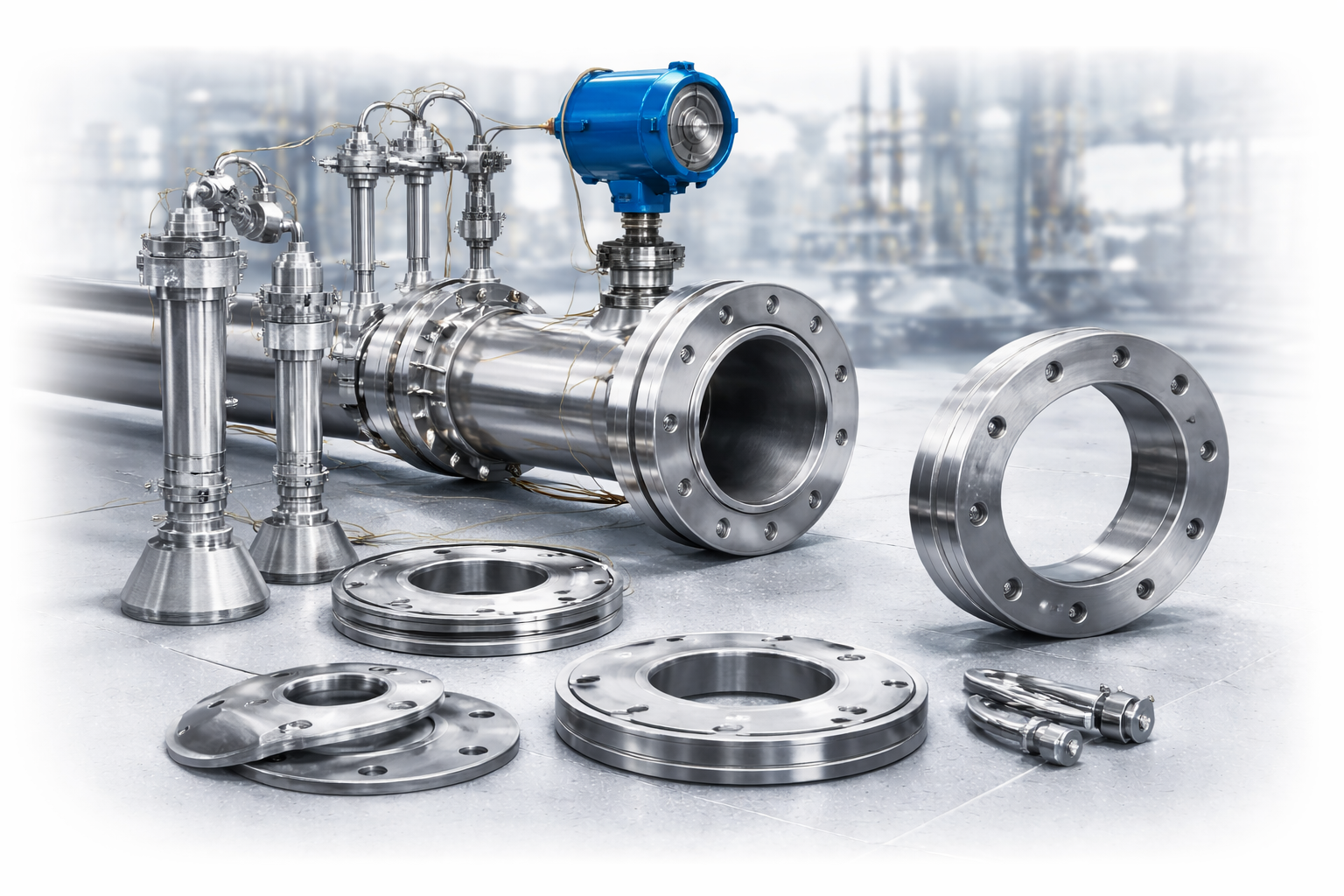
How orifice plate flow meter systems work
Orifice plate flow meter systems measure flow by placing a precision-machined plate with a bore into the line. As process fluid passes through that opening, velocity increases and pressure drops. Instrumentation measures the pressure difference across the plate, and the system converts that differential into a flow value. The underlying principle is straightforward, but the quality of the measurement depends heavily on how the surrounding hardware supports the element in service.
That means repeatability is influenced by more than the differential pressure reading itself. Plate design, edge condition, plate alignment, tapping geometry, upstream disturbances, meter run quality, and maintenance practices all affect how consistent the final readings remain over time. In many industrial applications, this is why an orifice plate system stays attractive. It is well understood, flexible across many services, and practical to maintain when the build is engineered correctly.
Customers looking for a broader context on system selection often begin with flow measurement systems, then narrow into the more specific component and system categories that fit their process. That usually produces a better long-term result than treating the plate as a stand-alone item.
Strong orifice plate performance usually comes from matching the plate style and installation method to the process, not just matching the nominal pipe size.
What goes into a complete orifice plate flow meter system
Primary element
The core measurement element is the plate itself. Flowell manufactures both universal orifice plates and paddle-type orifice plates depending on the installation method and maintenance preferences.
Plate retention and installation hardware
Mounting style affects alignment, sealing, and accessibility. Depending on the configuration, the system may use an orifice flange union or RTJ plate holders.
Meter run support
Flow profile quality matters. In systems with limited straight run or known upstream disturbance, a meter tube and straightening vanes can help stabilize conditions.
Protection and maintenance support
Service conditions may also require strainers, bleed rings, and condensate chambers to support longevity and safer system handling.
Choosing plate styles in orifice plate flow meter systems
One of the biggest decisions in an orifice plate build is choosing the plate style and how it will be installed. That choice affects maintenance workflow, accessibility, handling practices, and how easily the system can be serviced over time. A system that works well mechanically and operationally tends to remain more stable than one that is difficult to inspect or maintain.
Orifice plate flow meter systems selection chart
| Option | Common Strengths | Typical Fit | Related Link |
|---|---|---|---|
| Universal Orifice Plates | Standards-based, broadly applicable, practical across many industrial services | General-purpose applications where a common DP approach is preferred | Universal Orifice Plates |
| Paddle-Type Orifice Plates | Easier handling path in many maintenance workflows | Installations where plate changeout and accessibility are more active concerns | Paddle-Type Orifice Plates |
| Orifice Flange Union | Supports plate integration with defined tapping geometry | Common assembly choice when the flange-based installation method fits the service | Orifice Flange Union |
| RTJ Plate Holders | Robust retention and sealing support | Pressure-class-driven applications or builds needing a holder-style configuration | RTJ Plate Holders |
The right choice often comes down to how the line will actually be maintained, how stable the system geometry needs to remain, and whether the service demands special sealing or retention considerations. If the process is especially sensitive to pressure loss, you may also want to compare the system against venturi flow meter systems before finalizing the build.
Why installation quality matters in orifice plate flow meter systems
Orifice plate systems are often chosen because they are practical and familiar, but they still depend heavily on the installation. A high-quality plate can still produce unstable readings if the line has poor straight run, heavy swirl, turbulence from nearby fittings, or ongoing contamination in the process stream. In many cases, the reading problem is not the plate itself. It is the condition of the system around it.
This is where supporting hardware becomes important. A properly matched meter tube can create a more controlled section of line, and straightening vanes can help reduce swirl or unstable flow profile in more constrained layouts. In dirty service, strainers may prevent the debris-related changes that slowly undermine repeatability.
If you are diagnosing field problems, it is also useful to review what factors affect flow measurement accuracy, how to install a flow meter correctly, and how a differential pressure transmitter is calibrated as part of the troubleshooting path.
Common causes of poor repeatability
- Insufficient upstream or downstream straight run
- Swirl or turbulence from elbows, valves, reducers, and pumps
- Poor alignment or unstable installation geometry
- Debris and fouling that alter the effective restriction over time
- Mismatch between expected flow range and actual operating conditions
- Service conditions that make another DP element a better fit
Orifice plate flow meter systems performance priorities
Industrial teams do not all value the same thing in a measurement package. Some prioritize cost-effectiveness and standards-based familiarity. Others care most about maintenance practicality, stable installation behavior, or pressure-loss tradeoffs. That is why the chart below is useful during early comparison, especially when an orifice plate system is being evaluated against other DP approaches.
When to compare against other differential pressure options
Orifice plate systems are an excellent fit in many applications, but they are not automatically the best choice in every case. If permanent pressure loss is a major concern, venturi flow meter systems may deserve closer review. If service is especially demanding or velocity is higher, a flow nozzle may fit the operating conditions better. Broader comparisons can also start from differential pressure flow measurement to keep the system-level picture clear.
Flowell products commonly used in orifice plate flow meter systems
Flowell manufactures the supporting hardware that makes orifice plate systems more practical to build, maintain, and stabilize in service. These links keep the navigation path cleaner while making it easier to move naturally from system-level selection into the exact component category you need.
Universal Orifice Plates
Precision-machined plates for standards-based DP flow measurement across many industrial services.
Paddle-Type Orifice Plates
A practical option where accessibility and plate handling are important parts of the maintenance workflow.
Orifice Flange Union
Helps integrate the plate assembly into a piping system with dependable tapping geometry and fit-up.
RTJ Plate Holders
Supports applications that need a robust holder-style solution tied to pressure class or sealing requirements.
Meter Tubes
Creates a more controlled meter run where straight-run limitations or disturbances could affect performance.
Straightening Vanes
Helps reduce swirl and turbulence so the plate sees a more stable flow profile.
Bleed Rings
Provides venting and draining support between flanges for safer handling and maintenance access.
Strainers
Helps protect the system from debris-related drift, contamination, and premature wear.
Condensate Chambers
Useful in steam-related service where instrument-side stability matters to the full DP package.
How to review an application before ordering
A faster recommendation usually comes from starting with the operating conditions rather than the parts list alone. Once the process details are clear, it becomes easier to match plate style, installation hardware, and support components to the real service demands.
Key information to send
- Line size, schedule, or internal diameter
- Media type and any composition details that affect service
- Operating pressure and temperature range
- Minimum, normal, and maximum flow rate
- Allowable pressure drop and performance expectations
- Available straight run and known disturbances
- Material requirements and pressure class
Useful project notes
- Whether the system is new, replacement-based, or being upgraded for better repeatability
- Whether maintenance access or handling constraints influence plate style selection
- Whether debris, fouling, or steam conditions affect the installation
- Whether a modified dimension, replacement geometry, or print-driven part is needed through custom machine work
Once those details are ready, sizing support usually provides a faster path to a stronger recommendation than starting from a generic quote request with limited application data.
Standards and technical references
Orifice plate systems are often selected and reviewed using recognized industry standards and accepted differential pressure practices. For a widely recognized reference covering differential pressure flow devices, see ISO 5167. For supporting technical reading, you may also want to review flow meter calibration cost, how often industrial flow meters should be serviced, and flow meter turndown ratio explained.
Orifice Plate Flow Meter Systems FAQs
What is an orifice plate flow meter system?
An orifice plate flow meter system is a differential pressure measurement method in which a precision-machined plate creates a controlled restriction in the line and the pressure difference across that restriction is used to calculate flow rate.
How do I choose between universal and paddle-type orifice plates?
Universal orifice plates are often selected as a standards-based solution across many services, while paddle-type orifice plates are often preferred when handling and maintenance workflow play a larger role in the installation.
Do I need a meter tube or straightening vane?
Not always, but if the layout includes limited straight run or strong upstream disturbance, a meter tube and straightening vanes can help stabilize the flow profile and improve repeatability.
When should I compare an orifice plate system to another DP option?
If permanent pressure loss, service severity, or long-term stability are major concerns, it makes sense to compare against venturi flow meter systems or review the broader context of differential pressure flow measurement before making a final decision.
Can Flowell help size an orifice plate system for a specific service?
Yes. Use sizing support to send your line size, media, pressure, temperature, and flow range. Flowell can then recommend a practical configuration and compatible components for the application.
Talk with Flowell about your orifice plate system
If you are planning a new installation, replacing legacy hardware, or trying to improve repeatability in an existing line, send your service details through our contact page or start with sizing support. You can also return to the homepage for more product categories and technical resources.