What Factors Affect Flow Measurement Accuracy?
Accurate flow data is critical in industries where fluids and gases drive operations, safety, and profitability. From oil and gas production to refining, chemical processing, and industrial manufacturing, precise flow measurements influence everything from custody transfer and regulatory compliance to equipment efficiency and product quality. Understanding flow measurement accuracy factors is essential for engineers, operators, and decision makers who rely on measurement data to make informed choices and avoid costly errors. While modern flow meters are highly advanced, their performance can still be compromised by a variety of environmental, mechanical, and installation-related conditions.
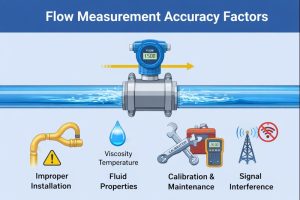
Key Flow Measurement Accuracy Factors You Should Know
Flow measurement accuracy depends on much more than the meter itself. Even the most sophisticated instrument can deliver inaccurate results if it is exposed to unfavorable operating conditions or installed incorrectly. Accuracy is influenced by how closely real-world conditions align with the assumptions made during meter design, calibration, and specification. These assumptions often include stable fluid properties, consistent flow profiles, and controlled environmental conditions.
Several broad categories of factors affect measurement accuracy, including environmental influences, mechanical considerations, and installation variables. Each category can introduce measurement uncertainty if not addressed properly. By understanding these factors, organizations can better select flow meters, design systems, and implement maintenance strategies that protect measurement integrity over time.
Temperature, Pressure, and Vibration Impacts
Environmental conditions play a major role in flow measurement performance. Temperature and pressure variations can directly alter fluid properties, while vibration can interfere with sensor stability and signal interpretation. These impacts are especially pronounced in oil and gas applications, where extreme operating conditions are common.
Temperature affects fluid density, viscosity, and expansion. Many flow meters rely on assumptions about these properties to calculate flow rates accurately. When temperature fluctuates beyond the expected range, measurement errors can occur. Pressure changes can have a similar effect, particularly for gas flow measurement, where density is highly pressure dependent.
Vibration is another critical environmental factor. It can originate from nearby pumps, compressors, engines, or structural resonance. Excessive vibration may cause mechanical wear, sensor drift, or electrical noise that interferes with signal processing.
Key environmental impacts include:
- Changes in fluid density due to temperature or pressure variation
- Altered viscosity affecting flow behavior and sensor response
- Thermal expansion or contraction of meter components
- Signal noise or mechanical stress caused by vibration
- Reduced sensor lifespan in harsh operating environments
Mitigating these effects often requires careful meter selection, proper material choices, and the use of compensation techniques such as temperature and pressure correction.
How Installation and Environment Affect Measurement
Even when environmental conditions are well controlled, installation practices can significantly influence flow measurement accuracy. Improper installation is one of the most common causes of inaccurate readings and premature meter failure. Flow meters are designed to operate under specific flow conditions, and deviations from these conditions can distort measurements.
Installation-related factors often interact with environmental conditions, compounding their effects. For example, thermal expansion in piping can change alignment, while vibration can worsen the impact of poor mounting practices. Understanding how installation and environment work together is essential for achieving reliable flow data.
Flow Profile Distortion Causes
Flow profile distortion occurs when the velocity distribution of a fluid entering the meter is uneven or unstable. Most flow meters are calibrated assuming a fully developed, symmetrical flow profile. Distortions can cause certain parts of the flow to move faster or slower than expected, leading to inaccurate readings.
Common causes of flow profile distortion include:
- Elbows, tees, and valves located too close to the meter
- Sudden changes in pipe diameter
- Partially open valves or control devices upstream
- Poorly aligned piping or misaligned meter installation
- Swirl or turbulence introduced by pumps or compressors
These disturbances can persist for long distances downstream, depending on flow velocity and pipe geometry. Straight pipe runs are often required upstream and downstream of the meter to allow the flow to stabilize. The required length varies by meter type and application, but ignoring these recommendations is a frequent source of error.
Environmental conditions can intensify flow distortion. For example, high-temperature fluids may expand, changing flow characteristics, while vibration can cause slight shifts in alignment that disrupt flow symmetry. Addressing flow profile distortion requires both proper system design and attention to real-world operating conditions.
Improving Accuracy Through Regular Testing
Even with proper installation and favorable environmental conditions, flow measurement systems require ongoing verification to maintain accuracy. Over time, wear, fouling, corrosion, and sensor drift can degrade performance. Regular testing and calibration are essential to identify and correct these issues before they impact operations.
Testing programs should be tailored to the specific application, meter type, and operating conditions. In high-value or safety-critical applications, more frequent testing may be justified. In other cases, periodic verification can provide confidence that measurements remain within acceptable limits.
Calibration as a Solution for Measurement Errors
Calibration is one of the most effective tools for improving and maintaining flow measurement accuracy. It involves comparing the meter output to a known reference standard and adjusting the meter as needed to correct deviations. Calibration can be performed in a laboratory or in the field, depending on the meter type and system requirements.
Regular calibration helps address several common sources of error:
- Sensor drift due to aging or environmental exposure
- Mechanical wear affecting moving parts
- Build-up of deposits on sensor surfaces
- Changes in fluid properties over time
- Installation-related shifts that alter measurement response
In addition to correcting existing errors, calibration provides valuable diagnostic information. Trends observed during calibration can reveal underlying issues such as increasing vibration, thermal stress, or flow instability. This information allows maintenance teams to take proactive steps to address root causes rather than simply correcting symptoms.
Effective calibration programs often include:
- Defined calibration intervals based on application criticality
- Traceable reference standards to ensure reliability
- Documentation of calibration results and adjustments
- Analysis of historical data to identify trends
- Integration with broader maintenance and quality systems
When combined with proper installation and environmental control, calibration plays a central role in achieving long-term measurement reliability.
The Interplay Between Mechanical Design and Accuracy
Mechanical design considerations also influence flow measurement accuracy. Meter construction, materials, and internal geometry determine how well the instrument withstands operating conditions and maintains calibration over time. Poor mechanical compatibility with the application can lead to deformation, wear, or corrosion that affects measurement performance.
For example, meters exposed to abrasive fluids may experience erosion of sensing elements, while corrosive environments can degrade materials and alter sensor response. High pressure applications require robust designs that maintain dimensional stability, while high temperature systems demand materials that resist thermal expansion and fatigue.
Mechanical factors to consider include:
- Material compatibility with the process fluid
- Resistance to corrosion, erosion, and fouling
- Structural integrity under pressure and temperature extremes
- Stability of internal components under vibration
- Ease of maintenance and inspection
Selecting a meter with appropriate mechanical characteristics is just as important as choosing the right measurement principle. Custom machining solutions can be especially valuable in complex or demanding applications, allowing components to be tailored to specific operating conditions.
Best Practices for Maintaining Flow Measurement Accuracy
Maintaining accurate flow measurements requires a holistic approach that addresses environmental, mechanical, and installation factors together. No single action can guarantee accuracy on its own. Instead, organizations should implement best practices across the entire lifecycle of the measurement system.
Recommended best practices include:
- Selecting meters designed for the specific fluid and operating conditions
- Following manufacturer guidelines for installation and straight pipe requirements
- Minimizing exposure to excessive vibration and temperature extremes
- Implementing temperature and pressure compensation where needed
- Establishing regular calibration and verification schedules
- Training personnel on proper installation, operation, and maintenance procedures
By treating flow measurement as a system rather than an isolated component, organizations can significantly reduce uncertainty and improve confidence in their data.
Partner with Us Today
Understanding what factors affect flow measurement accuracy is essential for achieving reliable data in demanding industrial environments. Environmental influences such as temperature, pressure, and vibration, along with installation issues like flow profile distortion, can all compromise measurement performance if left unaddressed. Regular testing and calibration provide a powerful means of correcting errors and maintaining confidence in measurement results. By focusing on these critical areas, organizations can protect their operations, improve efficiency, and reduce costly mistakes.
If you are looking for expert support in improving your flow measurement systems, Flowell Corporation is here to help. Learn more about your premier destination for custom machining and flow measurement products for the oil and gas industry. As the trusted name in Tulsa, OK, Flowell Corporation delivers top-notch services and high-quality products to meet all your machining and flow measurement needs. With three decades worth of experience and a team of skilled professionals, Flowell Corporation guarantees excellence in every aspect of its work. Contact us today to discuss how customized solutions and proven expertise can enhance the accuracy and reliability of your flow measurement systems.