How Is a Differential Pressure Transmitter Calibrated?
Accurate pressure and flow measurement is a foundational requirement in industries such as oil and gas, power generation, chemical processing, and manufacturing. At the center of many of these measurement systems is the differential pressure transmitter. Understanding how calibration works is essential for maintaining system reliability, safety, and efficiency. Differential pressure transmitter calibration is the process of comparing a transmitter’s output to a known reference standard and adjusting it to ensure precise measurement across its operating range. When performed correctly, calibration helps eliminate drift, compensates for environmental influences, and ensures that flow calculations derived from differential pressure readings remain accurate over time.
Differential pressure transmitters measure the difference between two pressure points, often across an orifice plate, venturi tube, or flow nozzle. These measurements are then used to infer flow rate, liquid level, or filter condition. Even small calibration errors can result in inaccurate data, product loss, compliance issues, or operational inefficiencies.
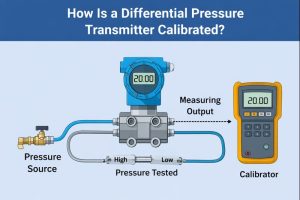
Differential Pressure Transmitter Calibration Explained
Calibration of a differential pressure transmitter involves verifying that the transmitter’s output signal accurately represents the applied differential pressure. Most transmitters convert pressure differences into an electrical signal, such as 4 to 20 mA or a digital output used by control systems. Over time, sensor components can drift due to temperature changes, vibration, mechanical stress, or aging electronics. Calibration ensures that the relationship between input pressure and output signal remains correct.
The calibration process typically focuses on two main parameters. Zero calibration ensures the transmitter outputs the correct signal when no differential pressure is applied. Span calibration ensures the transmitter outputs the correct signal at its maximum rated differential pressure. Together, these adjustments ensure linear and accurate performance across the entire measurement range.
Calibration can be performed in the field or in a controlled laboratory environment. Field calibration is often preferred for large or permanently installed systems, while bench calibration allows for tighter environmental control and higher precision. Regardless of location, the goal remains the same. Confirm that the transmitter’s readings match a traceable reference standard.
Steps for Proper Calibration and Verification
A structured and methodical approach is essential when calibrating a differential pressure transmitter. Skipping steps or rushing the process can introduce errors that compromise system accuracy.
Equipment Needed for Accurate Calibration
Before beginning calibration, technicians must ensure that all required equipment is available and properly certified. Common tools and equipment include:
- A calibrated pressure source such as a deadweight tester or precision pressure calibrator
- A high-accuracy reference pressure gauge or manometer
- A stable power supply for the transmitter
- A multimeter or loop calibrator to measure the output signal
- Test hoses, fittings, and isolation valves rated for the pressure range
- Manufacturer documentation for the specific transmitter model
All reference instruments should have current calibration certificates traceable to national or international standards. Using uncertified or out-of-tolerance equipment defeats the purpose of calibration.
Applying Zero Calibration
The first step in calibration is establishing the zero point. With both high-pressure and low-pressure ports open to the atmosphere and no applied differential pressure, the transmitter should output its zero signal. For a 4 to 20 mA transmitter, this is typically 4 mA.
If the output deviates from the expected value, the zero adjustment is made using either mechanical trim screws or digital configuration software. Once adjusted, the zero point is verified by rechecking the output signal under the same no-pressure conditions.
Applying Span Calibration
After zero calibration, known pressure values are applied incrementally across the transmitter’s operating range. This often includes at least five test points, such as 0 percent, 25 percent, 50 percent, 75 percent, and 100 percent of span.
At each test point, the applied pressure is compared to the transmitter’s output signal. If the output does not match the expected value, span adjustments are made according to the manufacturer’s instructions. After adjustments, the entire range is rechecked to confirm linearity and repeatability.
Verification and Documentation
Once calibration adjustments are complete, verification confirms that the transmitter meets accuracy requirements without further changes. Results are documented, including as-found and as-left readings, environmental conditions, reference equipment used, and technician identification. Proper documentation supports quality control programs and regulatory compliance.
Common Calibration Errors and How to Prevent Them
Even experienced technicians can encounter issues during calibration. Understanding common errors helps prevent costly mistakes and rework.
One frequent error is neglecting temperature stabilization. Differential pressure transmitters are sensitive to temperature changes, and calibrating a transmitter that has not reached thermal equilibrium can result in inaccurate adjustments. Allow sufficient time for the transmitter and reference equipment to stabilize before beginning calibration.
Another common issue is incorrect pressure connections. Reversing high and low pressure ports can produce misleading results, especially at low differential pressures. Always verify port orientation and labeling before applying pressure.
Improper venting of impulse lines can also introduce errors. Trapped air or liquid can alter the applied pressure, leading to incorrect readings. Ensure all lines are properly purged and vented before calibration.
Failing to isolate the transmitter from the process is another critical mistake. Residual process pressure can interfere with applied calibration pressure, posing safety risks and compromising accuracy. Always isolate and depressurize the transmitter before starting work.
Finally, skipping post-calibration verification is a major oversight. Verification ensures that adjustments were successful and that the transmitter performs accurately across its range. Never assume calibration is correct without confirming results.
Frequency of Calibration for Industrial Systems
Calibration frequency depends on several factors, including process criticality, operating environment, regulatory requirements, and manufacturer recommendations. In general, most industrial differential pressure transmitters are calibrated annually. However, systems exposed to extreme temperatures, vibration, corrosive media, or high cycling may require more frequent calibration.
Critical measurement points that directly impact safety, custody transfer, or product quality often follow shorter calibration intervals, such as six months or quarterly. Historical performance data can also guide calibration schedules. Transmitters that consistently remain within tolerance may justify extended intervals, while those exhibiting frequent drift may need closer monitoring.
Establishing a risk-based calibration program helps balance accuracy requirements with maintenance costs. Regular review of calibration records supports continuous improvement and operational reliability.
Why Calibration Affects Flow Measurement Accuracy
Differential pressure is commonly used to calculate flow rate using established equations. These calculations assume that the differential pressure measurement is accurate and stable. Even small errors in differential pressure can result in significant flow measurement inaccuracies, particularly at low flow rates.
For example, a slight zero offset can cause flow readings when no flow is present, leading to incorrect totalization. Span errors can distort flow calculations across the operating range, affecting process control and efficiency. In oil and gas applications, inaccurate flow measurement can impact custody transfer, emissions reporting, and regulatory compliance.
Proper calibration ensures that flow measurement devices operate as intended and that derived data support informed decision-making. Accurate measurements also reduce waste, improve energy efficiency, and enhance overall system performance.
The Importance of Professional Calibration Practices
While basic calibration procedures can be performed by trained in-house technicians, complex systems often benefit from professional calibration services. Specialized providers offer advanced equipment, controlled environments, and deep expertise in pressure and flow measurement technologies.
Professional calibration also ensures compliance with industry standards and provides detailed documentation for audits and quality assurance programs. For organizations operating in regulated industries, this level of assurance is invaluable.
Partner With Experts You Can Trust
Calibrating a differential pressure transmitter is not just a routine maintenance task. It is a critical process that directly affects accuracy, safety, and profitability. From selecting the right equipment to following best practices and avoiding common errors, proper calibration ensures that pressure and flow monitoring systems perform reliably in demanding industrial environments.
If you are looking for trusted expertise in flow measurement and precision machining, Flowell Corporation is your premier destination. Serving the oil and gas industry for over three decades, Flowell Corporation in Tulsa, OK, provides custom machining solutions and high-quality flow measurement products designed to meet the most demanding applications. With a team of skilled professionals and a commitment to excellence, Flowell Corporation delivers reliable solutions you can count on. Contact us to learn more about how we can support your machining and flow measurement needs with precision, quality, and unmatched experience.