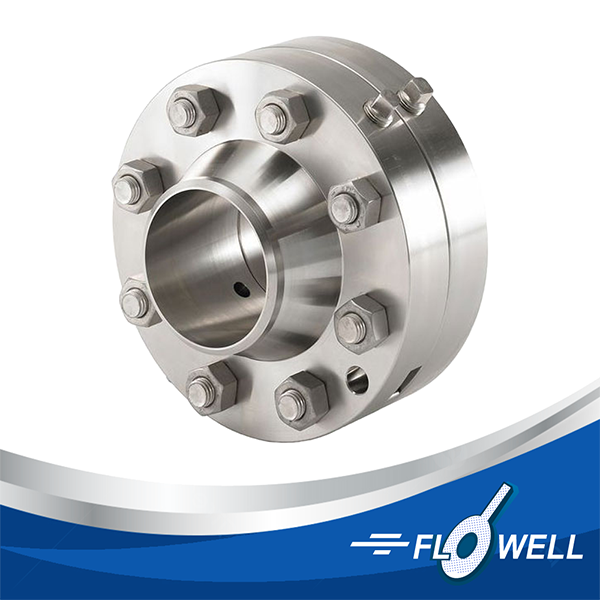
Orifice Flange Union
Flowell manufactures orifice flange union assemblies for dependable, repeatable differential pressure flow measurement with minimal downtime. Whether you are building a new meter run or upgrading a legacy line, every unit is built around what protects accuracy long-term: stable plate seating, aligned pressure taps, clean sealing faces, and rugged construction for demanding service environments. For deeper technical reading on how these assemblies work and where they fit, visit our orifice flange union page.
Need selection help? Submit your line size, media, and operating conditions through sizing support or contact us directly for a fast quote. You can also browse the full lineup at flow measurement products.
CL150 to CL1500
RF and RTJ Face Types
Carbon Steel and Stainless

Materials and build options for orifice flange union manufacturer
Flowell supports common materials for general service and corrosive environments, with alternates available when required for temperature, chemistry, or sour service. Every unit goes through machining and inspection of sealing faces and tap features to help maintain consistent differentials and reduce drift over time.
Carbon steel
Cost-effective and practical for general-purpose service where corrosion resistance is not the primary concern.
Stainless steel (304/316)
Corrosion resistance for aggressive media, elevated temperatures, and environments where carbon steel falls short.
Special alloys
Available on request for high temperature service, unique process chemistries, or sour service environments. Custom machine work is also available for non-standard requirements.
Material test reports are available on request. If your project has specific documentation requirements, include that in your quote inquiry.
Orifice flange union specifications
The table below covers the typical parameters involved in specifying an orifice flange union. All configurations should be confirmed against actual service conditions, ASME requirements, and site standards before ordering.
| Parameter | Typical Range / Option | Notes |
|---|---|---|
| Nominal Sizes | 1/2″ to 24″+ | Larger sizes available upon request |
| Pressure Classes | CL150, CL300, CL600, CL900, CL1500 | Match to ASME piping requirements |
| Face Type | RF (Raised Face), RTJ (Ring-Type Joint) | Match to mating flanges and sealing requirements |
| Tapping | Corner, flange, or pipe taps | Aligned to common DP practices and site standards |
| Materials | CS, 304/316 SS, special alloys | Material test reports available on request |
| Orifice Plate Compatibility | Paddle-type | See paddle-type orifice plates |
Pressure tap and face type selection
Tap style, face type, and pressure class all interact with each other during specification. RTJ faces are common at higher pressure classes where enhanced sealing is a priority, while RF is widely used in general service. Corner, flange, and pipe taps each relate to different installation standards and calculation methodologies. If you are unsure which combination fits your project, contact us with your process details and we will recommend the right configuration.
Measurement accuracy and plate fit
Measurement stability in any differential pressure flow measurement application depends on plate flatness, bore concentricity, edge quality, and repeatable clamping. Flowell machines and inspects sealing faces and tap features to help maintain consistent differentials and reduce drift over time. Pairing the flange union with correctly sized paddle-type orifice plates is the most direct way to protect long-term accuracy.
How to specify your orifice flange union
Send the details below and Flowell will confirm the right configuration and plate sizing approach. The more complete the process data is up front, the faster we can return a recommendation.
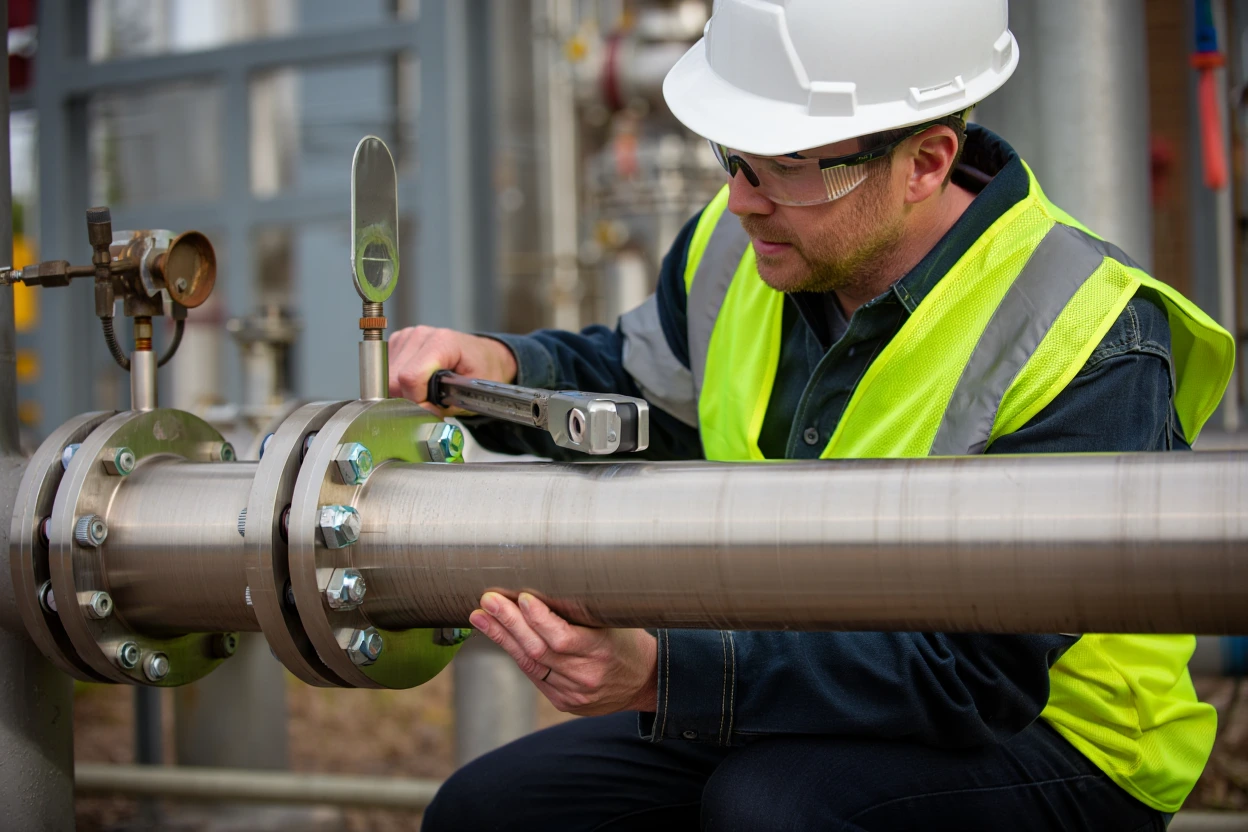
Required specification details
- Line size and schedule (or internal diameter)
- Pressure class (CL150 to CL1500)
- Face type (RF or RTJ)
- Material (carbon steel, 304/316 SS, or alloy)
- Tap style (corner, flange, or pipe taps)
- Orifice plate details (bore, beta ratio, thickness, style)
Process conditions and standards
- Media (fluid type and composition)
- Operating temperature and pressure
- Density and viscosity if known
- Minimum, normal, and maximum flow rate
- Applicable standard or methodology (site or project requirement)
- Documentation needs (MTRs, inspection reports, etc.)
Beta ratio and bore sizing
Beta ratio (beta = d/D) depends on line size, flow range, allowable pressure loss, and instrument range. If you are still working through that part of the selection, use sizing support and Flowell will recommend a bore size aligned to your methodology and operating constraints.
Related flow measurement components
An orifice flange union rarely operates alone. The surrounding hardware directly affects how accurately the primary element performs in service. Below are the components most commonly specified alongside a flange union for a complete and dependable meter run installation.
Paddle-type orifice plates
The primary element that pairs directly with the flange union to create the pressure differential used for flow calculation.
Meter tubes
Provide the straight-run geometry needed upstream and downstream of the flange union to support stable, repeatable readings.
Straightening vanes
Used where upstream disturbances from elbows, valves, or reducers need to be corrected before the flow reaches the primary element.
RTJ plate holders
An alternative holder arrangement for installations that require ring-type joint sealing at higher pressure classes.
Bleed rings
Used in conjunction with flanged assemblies where venting or draining capability is needed at the measurement point.
Venturi tubes
A lower permanent pressure loss alternative to orifice-based DP measurement, worth comparing when pressure drop is a larger constraint.
For a broader look at how the orifice flange union fits within a complete measurement assembly, review orifice plate flow meter systems or explore all available products through flow measurement products.
Standards reference for orifice flange union applications
DP flow measurement practices vary by industry, application, and project specification. Many gas measurement projects reference American Gas Association (AGA) methodologies, while others follow ISO 5167 for differential pressure devices in closed conduits. If your project references a specific standard, include it when you submit your application details so Flowell can align the configuration accordingly.
Additional technical reading
For a more detailed look at how orifice flange unions work, their applications, and how they compare to other DP primary elements, visit orifice flange union. Related reading is also available through what is an orifice flange, common applications of orifice flanges, and benefits of using orifice flanges for flow measurement.
Orifice flange union FAQs
What is an orifice flange union?
An orifice flange union is a flange pair with integrated pressure taps designed to hold an orifice plate between the faces. The pressure differential created across the plate is measured and used to calculate flow rate using established differential pressure methodologies.
How do I choose between RF and RTJ face types?
RTJ (Ring-Type Joint) is common at higher pressure classes where enhanced sealing is required, while RF (Raised Face) is widely used in general service. The right choice depends on pressure class, temperature, and your site or project sealing standard. If you are unsure, include your service details when you contact us and we will recommend the appropriate face type.
How do I choose the correct beta ratio?
Beta ratio (beta = d/D) depends on line size, flow range, allowable pressure loss, and instrument range. Send your process data through sizing support and Flowell will recommend a bore size aligned to your methodology and constraints.
Can the orifice plate be replaced without disturbing the line?
Yes. The union-style configuration is designed to simplify access for inspection, replacement, and re-ranging so you can minimize downtime during maintenance windows and turnarounds.
What information should I send for a quote?
Send line size and schedule, pressure class, face type (RF or RTJ), media, operating temperature and pressure, tap style, orifice plate details, and your applicable standard or methodology. The more complete the data, the faster Flowell can return a recommendation. Start through contact us or sizing support.
Does Flowell support custom configurations?
Yes. When standard configurations do not fit the service requirements, Flowell can assist through custom machine work for non-standard sizes, alloys, or dimensional requirements.
Talk with Flowell about orifice flange unions
If you are specifying a new meter run, replacing an existing assembly, or need help narrowing down the right configuration, send your process details through contact us or start with sizing support. You can also return to the Flowell homepage or browse the complete flow measurement products lineup.